
These octopus facts show just how fascinating these creatures are. Despite my love for all things cuddly, especially dogs, the octopus is my favorite animal. Although surprisingly, they have a lot in common with each other, but I’ll get into that in just a bit. Octopuses (not octopi!) are interesting animals and there is so much about them that the average human doesn’t know, but should!
1. 8 Tentacles, 3 Hearts, 9 Brains
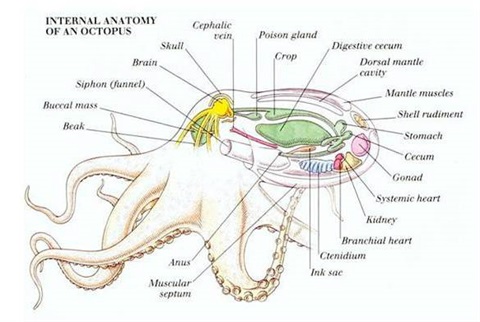
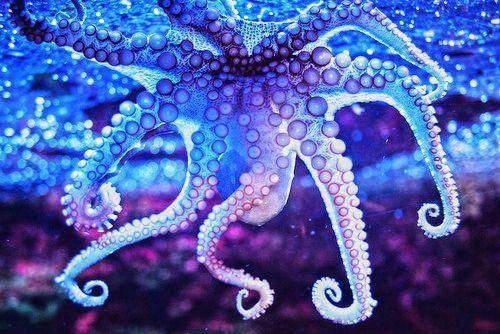
Octopuses don’t just have eight tentacles, but they also have three hearts and nine brains! Why nine? Because they have one in their heads and one in each arm. Duh! JK, there is nothing logical about that! A central brain controls the nervous system of the octopus. In addition, there is a small brain in each of their eight arms. This allows the arms to work independently of each other, yet together toward the same goal. As for the three hearts – two pump pump blood to the gills while a larger heart circulates blood to the rest of the body.
2. Can Fit Through TINY Spaces
A 600-pound octopus is able to squeeze through a tube the size of a quarter. Because octopuses have no bones, they are able to fit in extremely small spaces, like in this ‘plexiglass wonderland’ created by Nat Geo. Seriously, watch the video, it’s absolutely amazing!
3. Don’t Live Long
These wonderful animals don’t live long, unfortunately. The giant pacific octopus only lives between three and five years. The smaller breeds that can live in aquariums as pets have even shorter lives. They are hard to keep in captivity because they either escape or eat themselves out of stress. In the wild they die after reproducing, but we’ll get to that a little later.
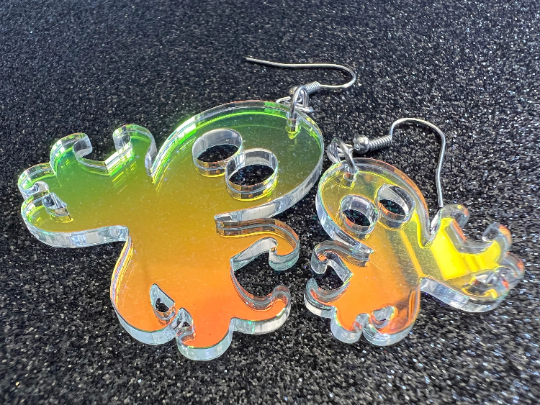
Buy laser-cut octopus earrings (customizable!) made on Hawaii here:
https://www.etsy.com/shop/Everyfelt?search_query=octopus


4. An Octopus is as Smart as a Dog
While the brain(s) of an octopus have quite a few things in common with humans, they are the most similar to dogs. In addition to being as smart, if not smarter than a dog, they also display all those inquisitive, friendly behaviors reminiscent of dogs.
“For scientists who study animal behavior, intelligence is not about acing a calculus test or taking a car apart and putting it back together. Intelligence comprises sophisticated cognitive skills that help an animal thrive. That may include the ability to come up with solutions to the problem of finding food, for example, or a knack for planning for some challenge in the future. Intelligent animals don’t rely on fixed responses to survive — they can invent new behaviors on the fly.”
New York Times
5. Camouflage Experts
Octopuses don’t just change the color of their skin. They also change the way they look and feel. Octopuses can control the color of their skin because they have special cells in their skin that are filled with different colors. Check out the video below of an octopus changing its appearance while sleeping. Perhaps it is camouflaging based on the surroundings in its dream?
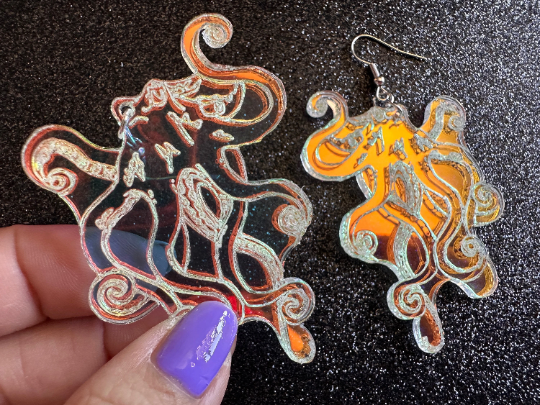
Check out these hand-made octopus earrings:
https://www.etsy.com/shop/Everyfelt?search_query=octopus
6. Octopus Facts: Blue Blood
No, octopuses are not royalty but they do have blue blood. The blood of the giant Pacific octopus has a copper-rich protein called hemocyanin that improves its ability to transport oxygen in cold ocean environments.
7. Octopuses Die for Their Young
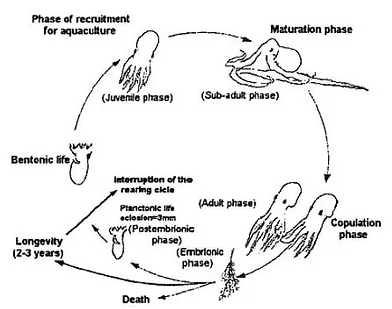
The female meticulously cares for her eggs until they hatch, forgoing food the entire time. She blows currents across the eggs to keep them clean and protects them from predators. The eggs might incubate anywhere from two to ten months, depending on the species and the water temperature. They will likely die shortly after the eggs hatch. Which looks like this, by the way.
8. Dangerous and Toxic
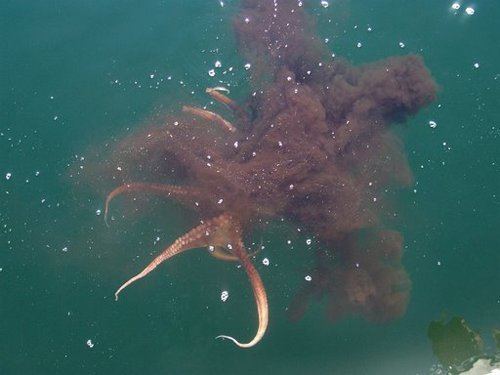
Octopuses have glands that produce a toxic ink which is then stored in large sacs. When an octopus is startled, it will squirt ink in one direction that simultaneously propels them in the opposite direction. This clouds the water to confuse a potential threat while the octopus flees to safety. The ink doesn’t just help them hide; it also harms the other animal because it contains toxins. Though octopuses are great fighters in the wild, they aren’t typically dangerous to people. However, some species are strong enough to kill a human if they felt threatened.
Check out these handmade octopus earrings created by the author of this article in Hawaii:
https://www.etsy.com/shop/Everyfelt?search_query=octopus
9. Escape Artists
The combination of them being smart as well as boneless makes them experts at escaping. There are many stories of octopuses escaping but some are more fascinating than others. In Santa Monica, California, a California two-spotted octopus disassembled a valve at the top of her tank and released at least 200 gallons of water into the surrounding exhibits and offices.
10. So Many Suckers
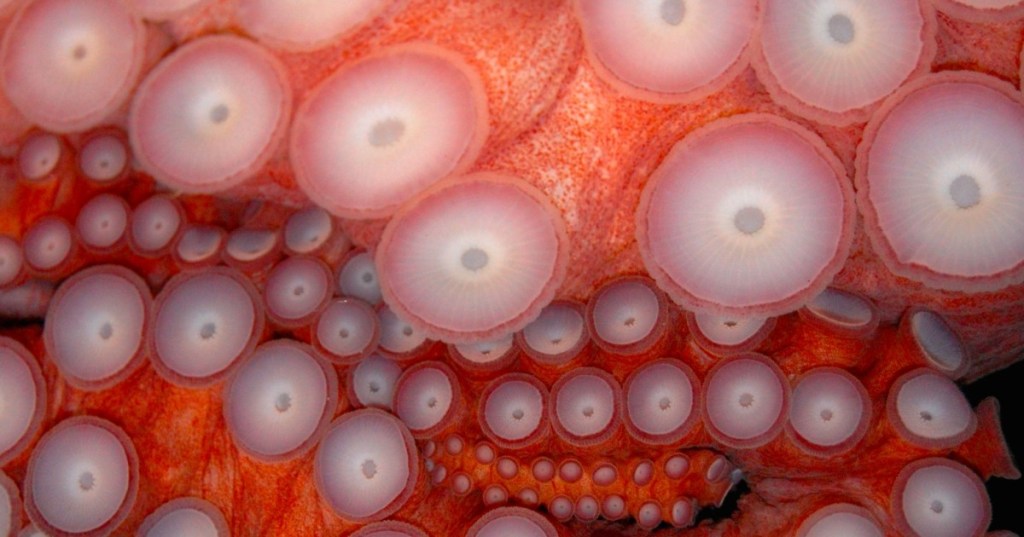
The eight tentacles (arms) of octopuses are equipped with one or more rows of sucker-like discs, hooks and other adhesive structures that help them ensnare prey. The arms of octopuses may have as many as 240 suction cups on the underside, in two rows. However, male octopuses have fewer on their reproductive arm.
11. Long and Short-Term Memory
Octopus brains and vertebrate brains have no common anatomy but support a variety of similar features, including forms of short- and long-term memory, versions of sleep, and the capacities to recognize individual people and explore objects through play. There is a famous video of an octopus returning to thank people who had saved it a day before.
12. Octopus Facts: They Use Tools
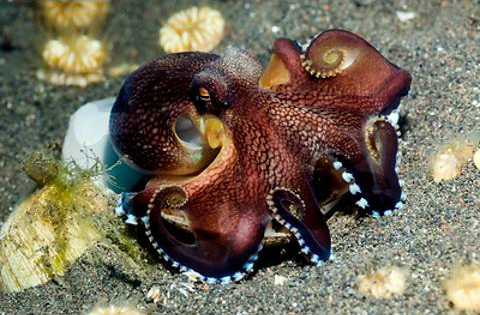
The octopus that flooded the aquarium to try to escape is just one example of octopuses using tools. Veined octopuses observed off the coast of Indonesia carried coconut shell halves under their bodies, and assembled them as necessary into shelters — something that wasn’t supposed to be possible in their corner of the animal kingdom.
13. Self-Cannibalism
Octopuses can sometimes suffer from autophagy, or self-cannibalism. That is what is described as “eating its own arms.” This is caused by stress. A stressed animal is not a healthy animal and is open to infection. It is believed that it is caused by a virus/bacteria which can manage to take hold on a stressed octopus.
14. Natural Body Builders
Human men wish they could be more like octopuses because Giant Pacific octopuses can consume 2–4% and gain 1–2% of their body weight each day. That’s the equivalent of a 150-pound person eating up to six pounds of food and gaining up to three pounds every single day!
“Octopuses are the most efficient animals in converting food to body mass: even with all that eating and gaining, they never become fat.”
Seattle Aquarium
15. Death After Mating
Both the male and female octopuses die soon after mating. The male dies a few months afterward, while female dies shortly after the eggs hatch. The male octopus has a modified arm called the hectocotylus, which is about 3 feet (1 meter) long and holds rows of sperm. Depending on the species, he will either approach a receptive female and insert the arm into her oviduct or take off the arm and give it to her to store in her mantle for later.
Summary: Octopus Facts
I think it’s safe to say that the octopus is an absolutely astonishing animal! We got to meet octopuses first hand in Hawaii, watch our video here. These octopus facts are just the start of what makes octopuses so amazing. Did you know that the oldest known octopus fossil belongs to an animal that lived some 296 million years ago? Read more about them in these books, one of which is sitting on my bookshelf waiting for me to finally read it!
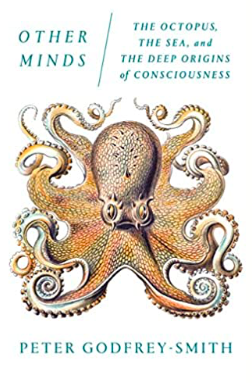
- Other Minds: The Octopus, the Sea, and the Deep Origins of Consciousness
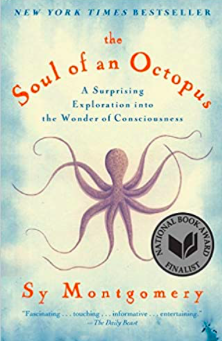
- The Soul of an Octopus: A Surprising Exploration into the Wonder of Consciousness
- Octopus: The Ocean’s Intelligent Invertebrate
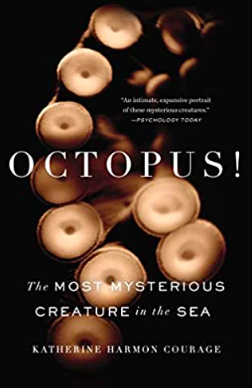
- Octopus!: The Most Mysterious Creature in the Sea
Follow The Travel Bug Bite for more great content!
 TheTravelBugBite